
 By lara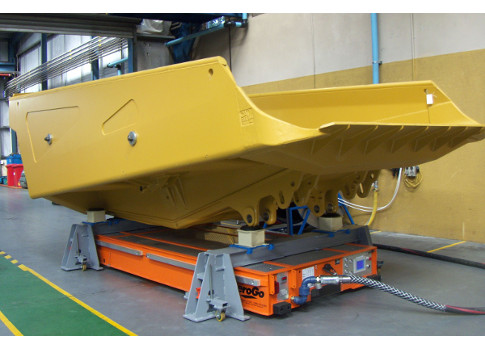
- Air casters provide a frictionless method for moving heavy loads, enhancing efficiency and safety.
- They distribute weight evenly, reducing floor damage and allowing for precise positioning.
- Industries such as manufacturing, aerospace, and power generation benefit significantly from air caster technology.
- Introduction
- What Are Air Casters?
- Advantages of Air Casters
- Applications in Various Industries
- Comparing Air Casters to Traditional Methods
- Implementing Air Casters in Your Operations
- Final Thoughts
Handling and transporting heavy equipment has been a primary bottleneck in industrial environments for decades. Conventional approaches—such as cranes, forklifts, and rollers—often require significant manpower, increase operational risk, and carry the potential for costly delays. Today, air caster technology is revolutionizing the industry with a safer and more flexible method for shifting some of the heaviest objects found in modern manufacturing. Innovative options like shock isolating casters are giving companies new opportunities to overcome challenges where precision, safety, and speed are critical.
Air casters, also known as air bearings, are distinguished by their ability to provide frictionless movement. By lifting tons of equipment as if it were floating on air, these systems reduce the time, effort, and floor damage typically associated with moving substantial objects. As businesses strive to streamline material handling and minimize downtime, the advantages of air casters are becoming impossible to ignore.
Whether adapting assembly lines or precisely positioning large machinery, industries ranging from aerospace to power generation are shifting towards air caster technology. The benefits extend far beyond convenience—air casters safeguard workers, infrastructure, and costly investments by transforming once risky and strenuous processes into routine material handling tasks.
Air casters are material handling devices that utilize compressed air to create a thin film between a load and the floor surface. This air film “floats” the load, allowing it to be moved effortlessly in any direction—even when the object being transported weighs several tons. The mechanics are analogous to an air hockey table, except on a much larger scale and with significantly higher load capacities.
By eliminating the friction that would otherwise exist between floors and typical wheels or rollers, air casters enable the safe and gentle movement of unwieldy machinery over a variety of floor types. This frictionless operation directly translates into reduced manpower requirements, allowing for the precise placement of sensitive and expensive equipment.
- Reduced Friction: Air casters minimize physical drag, enabling a single worker to handle loads that would otherwise require a team.
- Even Weight Distribution: The load is distributed across a broad air cushion, protecting floors from point damage and enabling transport over otherwise delicate surfaces.
- Omnidirectional Movement: The floating effect of air casters allows free movement in any direction, removing the limitations imposed by tracks or predetermined paths.
- Enhanced Safety: By limiting the need for heavy lifting and the use of traditional machinery in tight quarters, air casters contribute to a dramatically safer work environment.
Air caster technology’s versatility and reliability have made it indispensable across numerous sectors:
- Manufacturing: Air casters simplify the repositioning of large tooling, dies, and assembly sections, allowing for quick adjustments and optimizing floor space.
- Aerospace: Aircraft assembly operations benefit from the gentle and precise movement of sizable fuselage sections and wing components, improving efficiency and accuracy.
- Power Generation: The movement of transformers, turbines, and generators is safer and more precise, preventing accidental damage to floors and equipment during routine maintenance or installation.
This technology is also beginning to find use in sectors such as shipbuilding, defense, and research laboratories—anywhere the safe movement of heavy, sensitive, or awkwardly-shaped equipment is essential. According to a Forbes report on advanced manufacturing technologies, material handling innovations like air casters are a catalyst for next-generation industrial operations.
While cranes, forklifts, and rollers are standard tools across the industry, each brings inherent limitations when compared to air casters. Cranes require clear overhead access, can be hazardous in confined areas, and often necessitate costly floor reinforcements. Forklifts are limited by their turning radius and load capacity, which may cause surface wear or structural damage. Rollers require careful preparation and do not allow for fluid, omnidirectional changes in course.
- Greater Flexibility: Air casters offer 360-degree movement with no fixed path, allowing for efficient repositioning in high-density or sensitive environments.
- Cost Efficiency: Lower system and maintenance costs, paired with reduced downtime, make air casters a smart investment for material handling and plant relocation projects.
- Floor Protection: Even massive objects can be safely “floated” over delicate or newly installed flooring without risk of scarring or indentation, a significant improvement over wheels or steel bars.
According to Forbes, companies that utilize advanced material handling solutions gain a competitive edge by realizing faster, safer, and more cost-effective plant moves, which underscores the strategic value of technologies like air casters.
- Assess Load Requirements: Evaluate the maximum and minimum weights, dimensions, and sensitivity of the equipment to ensure the right air caster configuration.
- Evaluate Floor Conditions: While air casters are suitable for most industrial floors, it’s important to confirm flatness and correct any major irregularities for optimal performance.
- Train Personnel: Educating key staff ensures safe operation and maximizes the productivity potential of air caster systems.
- Consult Experts: Partnering with providers experienced in shock isolating casters and large-scale moves will help tailor a solution that fits both operational needs and safety requirements.
The industrial shift toward air casters reflects a growing recognition of their game-changing potential. These devices reduce operational risk, streamline workflows, and allow for extraordinary precision when handling some of the world’s largest, most valuable, or most fragile equipment. As rapid advances in manufacturing and engineering continue, integrating air caster technology is poised to become a defining feature of future-ready facilities across sectors worldwide.
 Micheal